
COO vs Director of Operations: Which Role Does Your Company Actually Need?
A COO and a director of operations are not interchangeable. The director owns a specific operational function and is accountable for performance within that domain. The COO owns organizational coherence across all functions, holding integration authority that no...
Operational Resilience Strategies: How Mid-Market Companies Build Systems That Hold
Operational resilience is not a crisis management capability. It is a system’s property that either exists in the architecture before pressure arrives or does not exist at all. Companies that respond well to disruption do not respond well because they are agile...
Operational Efficiency for Growth: Why Scaling Breaks Without Systems
Operational efficiency for growth requires documented systems and processes that prevent bottlenecks as revenue increases. Companies scaling without proper workflows experience quality drops, employee burnout, and missed deadlines because founders cannot personally...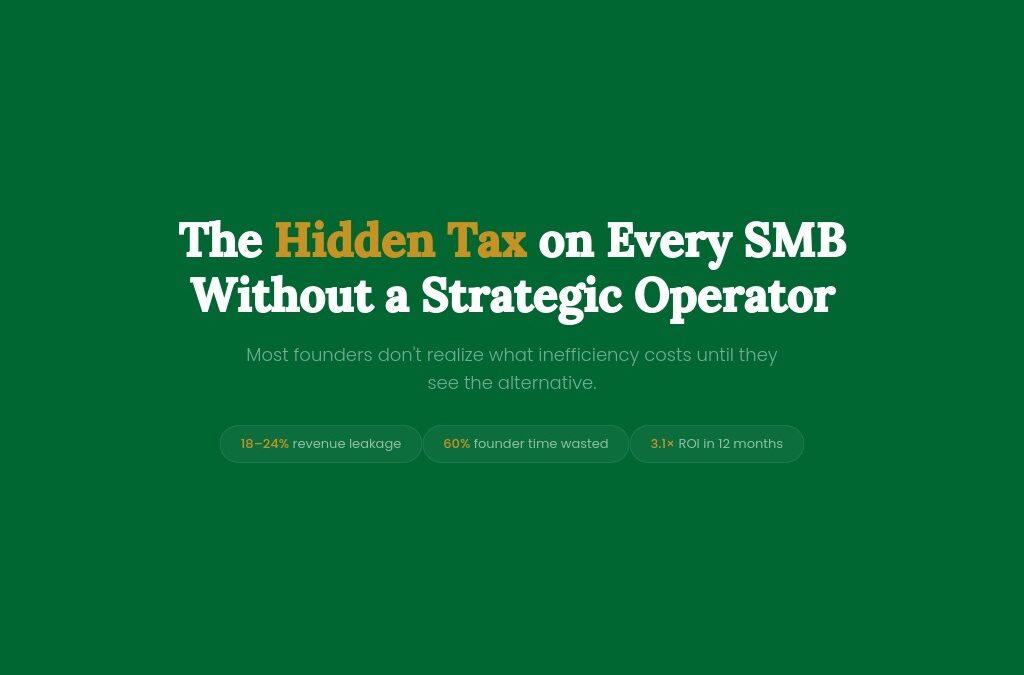
Recession Planning Strategies: Build the Buffer Before the Signal Arrives
Recession planning strategies involve building financial buffers and operational resilience before economic downturns arrive. Companies strengthen cash reserves, diversify revenue streams, reduce fixed costs, and establish credit lines during stable periods. These...
The 5x ROI Rule: One Question That Filters Bad Spending
Most business spending decisions are made under social pressure rather than financial analysis. A vendor presents a compelling case. A competitor is doing something similar. The expense fits an existing budget line. None of these is a reason to spend money. There are...
The Challenger Model: Coach, Consultant, or Challenger?
Most CEOs who hire a business coach describe the same experience after six to twelve months: the relationship is professionally run, the frameworks are useful, and nothing has fundamentally changed about how decisions get made under pressure. The coach is skilled, the...
The Triple-Five Method: Add 15% to Your Bottom Line
Most mid-market business owners approach profitability problems the same way: find more customers, close more deals, grow revenue. The logic is understandable. Revenue growth is visible, measurable, and feels like forward motion. Margin improvement through cost...
Virtual COO: Remote Operational Leadership for Growth-Stage Companies
A virtual COO is a remote operational leader who manages daily business functions, streamlines processes, and scales systems for growing companies without requiring a full-time on-site executive. This role handles strategic planning, team coordination, and efficiency...
Hire an interim coo
Hiring an interim COO means bringing in an experienced executive to temporarily lead operations and provide strategic direction without a permanent commitment. Companies use interim COOs to fill leadership gaps during transitions, manage crises, or test candidates...
Fractional CTO Services: Do You Need a CTO?
A fractional CTO provides part-time technology leadership without the full-time executive salary. Growing companies benefit from strategic tech guidance, infrastructure planning, and vendor management. This model works best for startups scaling past initial...